
by Ds. Baltazar A. Niangar, Pastor Emeritus, Th.B., A.B., D.D.
“I have other sheep that are not of this fold. I must bring them also, and they will listen to my voice. So there will be one flock, one shepherd.” — John 10:16
The church of Jesus Christ is one. It is also, visibly, divided. These two realities have sat side by side since the first generation of believers, producing both the most courageous acts of Christian love and the most bitter controversies in our history. How do we hold them together?
This study offers a map — not to declare “all traditions are equally right,” and not to insist “only mine is right,” but to practice what might be called discerning charity: recognizing what is genuinely Christian in traditions other than our own, while still marking clearly what has departed from the apostolic faith.
Seven Churches, Every Generation
The seven churches of Revelation 2–3 aren’t just ancient history — they’re recurring patterns. Ephesus is orthodox but has lost her first love. Smyrna suffers faithfully. Pergamum compromises with the surrounding culture. Sardis looks alive but is spiritually dead. Laodicea is lukewarm and self-satisfied in her own wealth. Every generation, every congregation, tends toward one of these seven types. “He who has an ear, let him hear.”
The Family Tree of Christian Traditions
Before the Reformation, the Western church was largely one body centered in Rome, while the Eastern churches — Greek and Russian Orthodox among them — carried forward the ancient councils and a rich sacramental life centered on theosis, growing into the likeness of God.
Then came the Reformation — not a departure from Christianity, but Luther’s rediscovery that “the righteous shall live by faith” (Rom. 1:17). From that recovery grew a whole family: Lutherans, with their sharp distinction between Law and Gospel; Presbyterians and the Reformed, built on God’s sovereignty and covenant; Anglicans, charting a middle way between Rome and Geneva. Later still came the Puritans, pressing personal holiness and congregational life, and the broader evangelical movement — Whitefield, Wesley, and their heirs — united above all by a passion to see the gospel preached to everyone.
Naming the Danger, Trusting the Shepherd
Not every group calling itself a church is safe ground. Some communities center their authority on a particular personality or extra-biblical writing rather than Scripture alone, and claim to be the one true church to the exclusion of all others. That sectarian instinct confuses the visible institution with the invisible church — the true company of the elect, known fully only to God.
And that leads to one of the most striking threads in this study: Christ has “other sheep not of this fold” (John 10:16) — elect people not yet gathered, whether Israelites not yet come to faith in their Messiah or Gentiles who haven’t yet heard the gospel. The Great Commission is how the Good Shepherd gathers them.
One Body, One Spirit
“There is one body and one Spirit… one Lord, one faith, one baptism, one God and Father of all” (Eph. 4:4–6). That oneness was never denominational uniformity — it’s the unity of the Spirit that runs beneath every cultural, linguistic, and theological difference. Some of our diversity is the gospel legitimately taking root in different cultures. Some of it is real error that needs correcting. And some of it is simply the mystery of a God whose ways are past finding out (Rom. 11:33).
What divides us is real. But what unites us — the triune God, the atoning work of Christ, the regenerating Spirit, the apostolic Scriptures — runs deeper still.
Soli Deo gloria.
About the Author

Our All in Christ is the teaching ministry of Pastor Baltazar A. Niangar, sharing biblical resources to help believers grow in God’s Word and the grace of Christ. View All Manuscripts
READ THE FULL STUDY
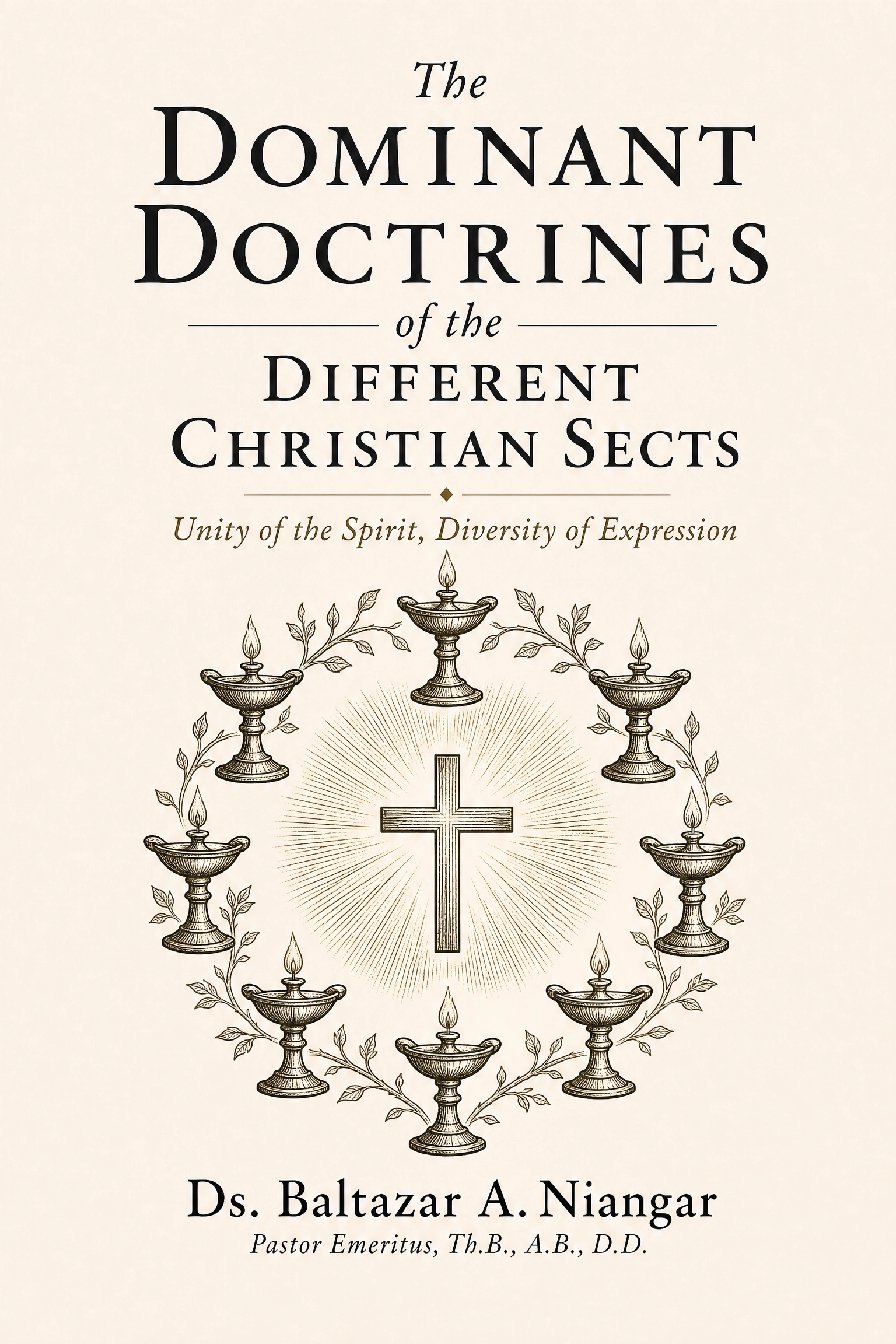
The Dominant Doctrine of The Different Christian Sects
Read the Full Study →
Explore The Dominant Doctrines of the Different Christian Sects and gain a deeper understanding of the beliefs and teachings that distinguish various Christian traditions.
Support the Ministry Through Gumroad
Support the ministry with an amount of your choice.
.