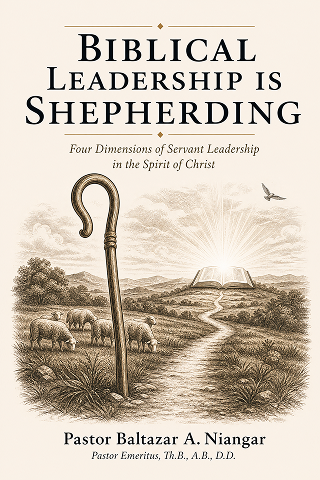

by Pastor Baltazar A. Niangar, Pastor Emeritus, Th.B., A.B., D.D.
“The sacrifices of God are a broken spirit; a broken and contrite heart, O God, you will not despise.” — Psalm 51:17
Most of us work hard not to be broken. We protect our image, defend our record, and hope no one looks too closely. Yet in my years of pastoring and teaching, I have seen that the greatest obstacle to meeting God is not doubt, and not even failure. It is a heart that has never been broken before Him.
In this study I ask what kind of brokenness God accepts, and I answer from Scripture. The brokenness He pardons is not calamity or private regret. It has three dimensions, and together they make one work of God.
Repentance: The Turning of the Will
Isaiah’s invitation begins with a demand: “let the wicked forsake his way, and the unrighteous man his thoughts; let him return to the LORD, that he may have compassion on him” (Isa. 55:7). Before there is pardon, there must be turning.
The Greek word for “confess” in 1 John 1:9 is homologēō, which means “to say the same thing.” True repentance agrees with God about my sin. It is different from the remorse of exposure, which weeps because it was found out. Godly grief “produces a repentance that leads to salvation without regret” (2 Cor. 7:10). And real repentance bears fruit, as it did for Zacchaeus, who gave to the poor and restored fourfold what he had taken (Lk. 19:8).
Regeneration: The Renewal of the Nature
I cannot turn in my own strength. The Spirit of God must first do something in me, and Paul names it plainly: “if anyone is in Christ, he is a new creation” (2 Cor. 5:17).
This new life is lived out in Romans 12:1–2. A living sacrifice is one that keeps getting up from the altar, offering the body, the mind, and the ordinary work of the day to God as worship. So the brokenness of regeneration is not a single crisis. It is a daily discipline, and it ends in freedom: the form of the cross and the freedom of the resurrection.
Reformation: The Correction of Doctrine and Life
God also breaks whole communities. The Reformation was born when men and women compared the teaching of the church with the Scripture and were willing to say, “We have been wrong. Scripture says otherwise. We must change.” The reformers called this Ecclesia reformata, semper reformanda, the church reformed and always reforming.
That work reaches both belief and conduct. The Bereans examined the Scriptures daily “to see if these things were so” (Acts 17:11), and James reminds us that a faith with no works cannot save (Jas. 2:14). Right belief and right practice belong together.
Come Broken
Pardon, new birth, the indwelling Spirit, and a renewed mind are not prizes for the perfect. They are gifts God pours out on souls who simply come. He does not ask for religious performance. He accepts the broken and the contrite.
So come honestly, with nothing to offer but yourself, and receive the abundant pardon God has promised.
Soli Deo gloria.
About the Author

Our All in Christ is the teaching ministry of Pastor Baltazar A. Niangar, sharing biblical resources to help believers grow in God’s Word and the grace of Christ. View All Manuscripts
READ THE FULL STUDY
Biblical Leadership is Shepherding
Read the Full Study →
Christian Balanced Thinking and Life adds three reflection questions for each chapter, a set of personal questions and challenges, a glossary, and a Scripture index
Support the Ministry Through Gumroad
Support the ministry with an amount of your choice.