
by Pastor Baltazar A. Niangar, Pastor Emeritus, Th.B., A.B., D.D.
“Seventy weeks are decreed about your people and your holy city, to finish the transgression, to put an end to sin, and to atone for iniquity, to bring in everlasting righteousness, to seal both vision and prophet, and to anoint a most holy place.” — Daniel 9:24
Few passages in the Bible have been argued over as much as the seventy weeks of Daniel. Charts have been drawn, dates have been set, and whole systems of prophecy have been built on four short verses. I would like to set the charts aside for a moment and begin where Daniel began, on his knees.
He had read in Jeremiah that Jerusalem’s desolation would last seventy years, and he did not sit back and wait. He prayed and confessed his people’s sin (Dan. 9:3). God answered with something far larger than Daniel asked. This short study follows the four questions that the answer raises: how long the weeks run, what they were for, to whom they were given, and how they unfold. My answer to each one is the same. It is Jesus Christ.
How Long the Weeks Run
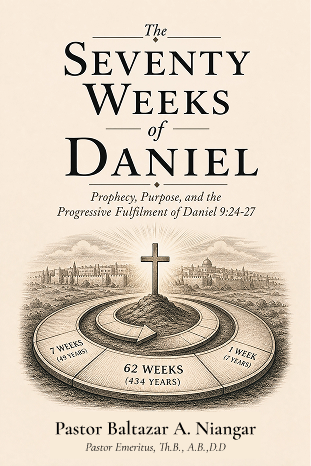
The seventy “weeks” are seventy sevens of years, 490 in all. They fall into three parts: seven weeks for the rebuilding of Jerusalem under Ezra and Nehemiah, sixty-two weeks leading to the Anointed One, and one final week, with the cross at its midpoint (Dan. 9:25–27). Some teach that a gap of two thousand years or more sits between the sixty-ninth week and the seventieth. I do not find that gap in the text. Gabriel announces one decree and one continuous period.
What the Weeks Were For
The angel names six purposes: to finish the transgression, to put an end to sin, and to atone for iniquity, then to bring in everlasting righteousness, to seal vision and prophet, and to anoint a most holy place. Not one of them is left to human effort. Every one is fulfilled in the death and resurrection of Christ and in the gift of the Spirit to his Church (2 Cor. 1:20).
To Whom the Weeks Were Given
The weeks were addressed to “your people and your holy city.” Persia restored Jerusalem, Antiochus profaned the temple, and Rome destroyed the city in AD 70, as Jesus had foretold (Matt. 24:2). Most of the nation rejected its Messiah, and yet Paul asks, “has God rejected his people?” and answers, “By no means!” (Rom. 11:1). The weeks are not the end of God’s purposes for Israel. They are the turning point that opened the door to the nations.
How the Weeks Unfold
Biblical prophecy moves in overlapping circles, as the seals, trumpets, and bowls of Revelation do, and not in a single straight line. I call this progressive parallel fulfilment. The Anointed One is “cut off” (Dan. 9:26). At the midpoint of the final week he puts an end to sacrifice and offering (Dan. 9:27), and the temple curtain is torn in two (Matt. 27:51). The apostles then carry the gospel first to the Jew and then to the Gentile, and the judgment on Jerusalem follows. It is one story, seen in stages.
Where This Leaves Us
The God who numbered these weeks also numbers our days. History is not chaos. It is purpose, and the centre of that purpose is the cross. If you have been unsettled by end-times speculation, come back to Daniel’s prayer, and then to the Anointed One who answered it. Every prophecy points to him.
Soli Deo gloria.
About the Author

Our All in Christ is the teaching ministry of Pastor Baltazar A. Niangar, sharing biblical resources to help believers grow in God’s Word and the grace of Christ. View All Manuscripts
READ THE FULL STUDY
The Seventy Weeks of Daniel
Read the Full Study →
The Seventy Weeks of Daniel adds four full chapters with Scripture quoted throughout, reflection questions after each chapter, personal questions and challenges, a glossary, and a Scripture index.
Support the Ministry Through Gumroad
Support the ministry with an amount of your choice.
.